Monday, July 26, 2021

Abraham Lincoln - The Prairie Years - Vol. 1 - by Carl Sandburg

 Lincoln and Illinois used to go hand in hand; not so much now.  Sandburg was born in Illinois in the later 19th Century when Lincoln Legends were everywhere. So it was natural that Sandburg could write a very good book about Lincoln. This is not a biography as much as a narrative history. It was published in 1925.

Forced to read other Sandburg in high school, I didn't enjoy his work; I almost skipped reading this book.

Lincoln was as interesting and nuanced a character as we could find; it's a good thing he was so famous, since his life is very interesting to read about.

He was self-taught and a life time learner; though he received some encouragement as he grew. His father did not encourage his learning to read, etc. --it took time away from the heavy farm work--as a boy and young man, Lincoln excelled at these things.    "Lincoln Logs" and "rail splitter": no kidding. William Faulkner told the story of a farmer in MS with 5 children that he taught to work very hard---just not for him; he was so hard on his kids they all left him to tend his farm alone in his old age. Lincoln's dad was bit like that.

The narrative is chatty and gossipy: Lincoln's mother, Nancy Hanks, was born out of wedlock, which may have resulted in the entire family moving west from Virginia to Kentucky soon after her birth (late 1700's); her mother did as she pleased until she finally settled on a husband she loved. Nancy was sent to live with a relative. Nancy was uniquely strange and mystical, solitary, religious; she died young when he was a child; suddenly from an infectious disease. A few years later, his sister died in childbirth.

These were hard losses. Fortunately, when his father remarried, the lady was kind, encouraging and comforting. As a teen, Lincoln chopped wood, cleared acres, helped on farms---and wrote letters for people for money---he had taught himself to write so well he could market the skill. 

All his life, he hand-wrote his own letters to hundreds of people. Even to the current time, examples of his work are sometimes found among  family papers in dusty old attics. When this book was being researched (1920's) those letters were everywhere: libraries, museums, personal collections. 

Also, when Sandburg did his research, there were still many people living who had known Lincoln in life; that's why the book is full of all the juicy nuggets, it seems: people would remember some incident concerning Lincoln as a child, young adult or as a circuit lawyer in the 1840-50's.

Notes made after completing the book:

Lincoln's mystical, slightly strange mother who died young, leaving him when he was about 9, went about her daily chores reciting Bible verses and scripture to the children. It was his foundation of moral teaching. He was a highly moral man, spiritual; but seldom went to church. He was regularly criticized for this, yet had a solid reputation as Honest Abe right from the beginning.

Lincoln was a Stud when he was young. 6 ft 4in and the strongest young man around. Not a bully, but the one the other boys called when they needed help with a bully. He had a following right from the start this way, his club. 

He worked harder than anyone else, too. His moral fiber was secure; he did not drink though he was not a Temperance Man. He piloted a flatboat on the MS River  to New Orleans, taking a steamer back. Then he settled in Salem IL. He had seen a certain girl there.

His love life? Back in those early days in Salem he fell in love with Anne Rutledge and she with him. They were engaged. It was perfect. Then malaria came to town: within days she was gone  "into the silence". Lincoln nearly went mad with grief. He was already full of gloom and abandonment from the deaths of this Mother and sister and others. He was obsessed with death. Friends helped him through it and he pulled himself together somehow.

Later in Springfield he endured a difficult courtship with Mary Todd, which led to marriage, after some break ups and make ups. Mary was rich and politically connected. Friends thought they would work as a political couple, and they did. He was the public face and she worked behind the scenes. She was educated, smart, social---and she was also the child of a mother who died young. She had abandonment issues so severe she could not get along with her step-mother. As a child in Lexington KY, she had to be boarded at her school, two blocks from her home. 

The couple was united in their love for their children---and only one survived. The line was not prolific; if memory serves, the last direct descendant of Abe and Mary passed away about 1980?

At the current time, with our world falling apart, it seems sometimes, just like Lincoln's was, it comforts me to read a book like this. They writing style was excellent. I'm read a first edition; copies of these are hard to find. Other editions are condensed and abridged, but the original was great.

Wednesday, June 30, 2021

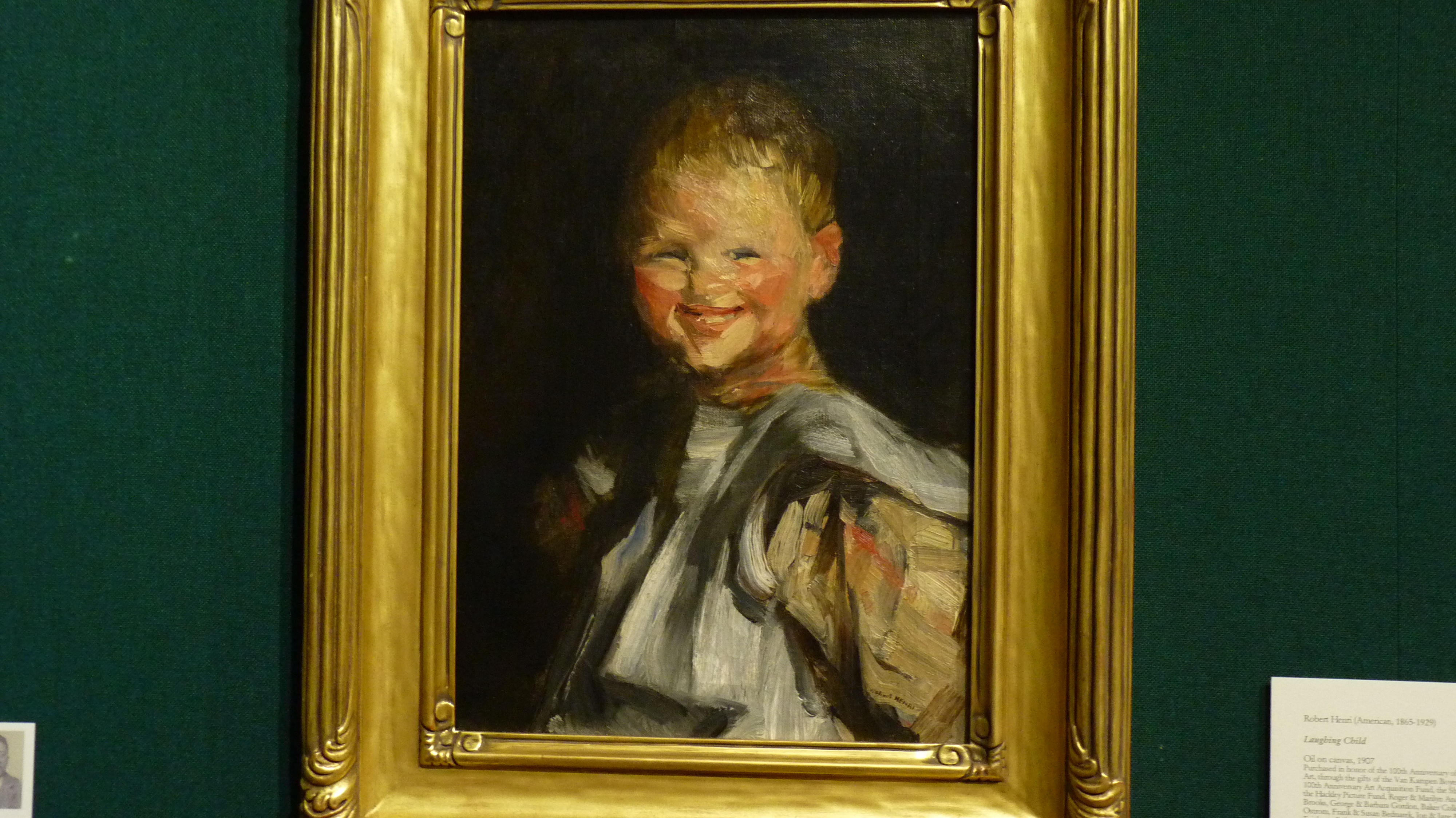
Art Museum in Muskegon, MI---a couple of years ago


 I have lived on the shore of Lake Michigan (off and on) for 60 years, but never took a boat trip across the lake; a couple of years ago we did that; and explored the town. We found this The Muskegon Museum of Art. It's a small, convenient museum--perfect of an afternoon.  

Old-time, pre-pandemic fun!! 

Wednesday, June 2, 2021

Memorial Day Reading

 By chance, I found myself reading two books about Arlington National Cemetery:

"On Hallowed Ground" by Robert M. Poole and

"Where Valor Rests" which is a National Geographic picture volume


My parents are interred in Section 69 at ANC, on a small rise overlooking the Pentagon. What I did not realize until I read these books: shortly (2 years and 4 months) after Mother's burial, on Sept 11, 2001, the American Airlines Flight 77--doomed--came screaming in only tens of feet over the Section, aimed at the West Face of the Pentagon. Debris from the attack was scattered all over the Section, which was declared a crime scene.

Because our family lived for a time in Alexandria VA in the 1950's, I have some memories of the Cemetery. Times were freer in those days: on a nice day, Mother would bring us kids over to tour the Mansion, or at least the grounds, and explore the Cemetery on some lovely spring or summer day.

As a military family, we could use the rec facilities at the adjoining Army base, Fort Myers. We swam in the pool there frequently, in days before air conditioning.

On Memorial Day in 1958 the Unknown Soldiers (remains) from WW2 and Korea were interred. There was a huge ceremony, with President Eisenhower, national and world leaders attending, just a few miles from our home.

No, I was not invited: I was 10. But my Dad was a member of Army Counter Espionage (a security force); every one of those guys in or around DC was called in to do security for the event. He spent the day in a hot car on one of the winding lanes of the Cemetery, with all the rest, keeping their eyes open for trouble.

We--Mom, my brother and I watched the event on TV. It was among the first such events televised in the US.

The Lee Family of old, had direct ties to George Washington, through his wife. Washington's campaign kit, including a large tent and lots of furnishings, ended up stored in the Lee Mansion on the property; rescued by one of the servants, presented to the Union Army. Other Washington artifacts were looted. But the campaign kit is on display at the Yorktown battle museum which we say a view years ago.

History.  It flows along, it flows through us all. 

One of our great nephews had a couple of tours in  Afghanistan in the first decade of the current century. He lost friends; they are now interred in Section 60, the Saddest Acre in America. He very nearly ended up there, himself.

Tuesday, May 4, 2021

Replaying Good Old Times....since the present isn't all that inspiring.


My last photo from Rome taken the day before we left, two years ago. I liked intimate little details such as this.


Pretty sure this is the court yard of the American Academy in Rome.


In Trastevere, a famous church with a famous Bernini sculpture and other inspiring art.


Anyone who ever was in Rome knows about these. I loved these.


One of my favorite photos of the entire trip. In Trastevere. I'm happy we stayed in Trastevere; that I successfully figured out a good B N B and that it all worked so well.

Saturday, April 24, 2021

Reading Old Books, Again: "The Sketchbook" by Washington Irving

 Washington Irving was born just as the American Revolution was ending; he died right before the American Civil War began; interesting time for a life-span. He came from a wealthy, influential family.

Over the course of his years, his many published works made him America's most famously published and popular writer before Mark Twain. He was so loved that, even today, if you notice the name "Irving" on any place/location (that may have existed before 1900) it was probably named for Washington Irving. I learned that Irving Park, IL is such a place, for example.

The Sketchbook contains his famous "Rip Van Winkle" and "Legend of Sleepy Hollow" stories. It is different to read the stories as they were originally penned than to see them recreated as movies or cartoons for children. 

The book is written as a "travel", based on Geoffrey Crayon's sojourn in England about 1820. He likes the simple, rustic and rural English country life--he glorifies this richly and well. 

He wrote about King James I of Scotland, held as a royal hostage in the Tower at Windsor Castle in the early 1500's. As I watched the images of the castle on TV during the funeral for Prince Phillip, I wondered where the young king was held; and I thought of Irving, visiting the castle about 1820; he felt that was "modern times": he looked back at 1500 as if it were deep history; by now, 200 more years have past.

That kind of timelessness flows throughout the book. Such as, an idle hour solitary tour around the inside of Westminster Abbey, with no one to disturb his ramblings. In his day, the place had a boys' school attached (maybe still does?) with the sounds of kids playing just outside.

He held Shakespeare in almost godly reverence and wrote about his visit to Stratford-on-Avon; the town was a tourist trap even then, with fake relics of the Bard on sale around town like pieces of the True Cross.

Irving had a creepy or maudlin streak: I read somewhere he was mourning the death of his 17 year old fiancee from TB. He was about 35 at the time; another case of a man in his 30's engaged to a teenage girl. It gives us the creeps today, but was common in the distant past.  He wrote several stories of love gone wrong (and the girl wastes away to death), "the horrors of the tomb", regrets of the living as they mourn the dead, etc.

There's a series of stories about being invited to spend Christmas at an isolated estate of a family that tried to preserve the ancient customs of the land. These essays are said to have influenced Dickens, much later, to write "A Christmas Story".

At first, I was wishy-washy about finishing the book, but I did. I have internalized the material. My understanding of the world has increased by this experience. 

Now what shall I read?


To Remember Dad's 103rd Birth Anniversary, Something Different

 My Grandparents on my Dad's side were both "bonus babies", kids who were born to much older parents, long after they expected...