Monday, July 16, 2018
The Last Butterfly of our Season was Freed Today...
He is a spunky male version of a Monarch--see those little black spots on the under wings--that means he's a Boy. He was anxious to be released and flew away immediately. Then he returned to the yard to sip nectar from the many flowers in the yard. Satisfied with his lunch, he joined the others that we have released in recent days. He needs to find mates to help create the next "flight" of the monarchs.
Saturday, July 7, 2018
"The Butterfly Hotel" will soon close for the Season-nearly all have matured.
| "First Flight #1: Black Swallowtail Butterfly, Glenview , IL" |
| "First Flight #2: Monarch Butterfly, Glenview, IL" |
Three summers ago, we noticed small "caterpillars" on the dill plants in our garden; Google images ID'd these the Black Swallowtail. But a day or so later we noticed the creatures were gone--eaten by birds or insects. So I learned how to nurture eggs (little white specks) and small caterpillars in a large container (kept out of direct sunlight) indoors (on sprigs of cut dill I renewed each day). There are many YouTube and internet instructions for the procedure. But you need an ample supple of their food, fresh and on-hand, in this case dill.
About a week later, the creatures grow large: they eat-eat-eat and they poop a lot (you have to clean the container frequently!) Then they purge---it's as messy as it sounds---and go into a cocoon-like form on a small branch you supply in the container. About 10 days after that: Bingo! You have a lovely Butterfly. Give him a couple of hours to fill out and you are ready for the "Release Ceremony"! Small children go giddy over these shows! My neighbor and I each have a super abundant source of nectar for them: practically wall-to-wall flowers in our modest suburban lots.
Monarchs
Years ago, a friend supplied me with a few Milkweed seeds which I planted in a sunny area. Finally we had enough plants and started noticing Monarchs around; we started nurturing their eggs as well. The procedure is quite similar, the results the same; Monarchs are a little less messy, since they do not purge. A generous supply of Milkweed, or variety of, is essential!
The most interesting thing to me was observing that individuals among our "guests" had individual traits (even though members of each species looks alike). As caterpillars, some are more active, aggressive, etc; as butterflies some are more or less tolerant of the human hostess. For the past two weeks we have seen one Monarch "Patrol The Yard" in regular patterns to run off any other butterflies--yet I can get quite near to it, even offer to pick it up.
Census this year: 13 Monarchs and 20 Black Swallowtails released to pollinate and reproduce.
Wednesday, June 27, 2018
The Biggest "little book" Around! An Important and Entertaining Memoir...
"How to Make a Life - A Tibetan Refugee Family and the Midwestern Woman They Adopted" by Madeline Uraneck.
When I learned from my cousin, Madeline Uraneck, that she planned a career shift: writing for publication, (she is a dedicated, hard worker, an educator, communicator: an "idea person" who cares equally about the welfare of humanity.) I knew she would produce high quality, unique and prolific books. "How to Make a Life.." is her first. And she does.
I've read it and I'm excited about it!
Madeline explains early in the book that she and her two siblings, David and Susan, lost their Mother, Anne, (to a sudden and shocking illness in the early 1950's). Anne was a younger sister of my Mom; the sibling that my Mother had the greatest affinity for: they were both quieter and loved to read. Their idea of a nice summer day, in the 1930's, was to walk to the public library, browse for books (adult books) and try to check them out on their kids' library cards, so Mom told me. How proud they would be of Madeline's book!
It is a memoir of her friendship with Tenzin Kalsang, a brave Tibetan lady and her family: Migmar Dorjee, her equally brave husband, and four kids. Migmar was born in Tibet; he was a little boy when the Chinese invaded and stole his country (1950). He was a bit older during his harrowing escape to one of India's Tibetan refugee camps! Tenzin was born in the refugee camp (1962); maybe we would think he robbed the cradle in marrying young Tenzin, but her mother wanted her to marry a man who had already shown he could take care of a wife and kids.
Eventually, he had to take care of the kids (with help from grandparents), because Tenzin won a place in a resettlement effort for Tibetans from the US government! It was a family decision to send her; they were separated for several years before Migmar and the children arrived in Madison, WI. (1998)
Tenzin worked as much as she could at the typical "menial" but necessary service jobs to send funds home to the family, etc. Tenzin earned her way! She met Madeline when she was cleaning offices; she must have sensed "a friend", since Madeline gives off smiling, bubbly charm--the face of her intellect and determination to help, if possible; acquaintance matured to friendship.
Much time has passed. US citizenship achieved, children grown and married. The second half of the book is awash in entertaining and enriching travel experiences when Madeline, Susan and the kids travel the US and the world to meet families, chaperone to help facilitate the semi-arranged marriages for the kids and visit important religious centers.
An important point of the book: Tenzin, Migmar and family helped fill a void felt by Madeline; each of us has our "empty rooms, dark cellars or monsters under the bed" or whatever; we cope with these as well as we individually can.
As a self appointed Family Historian, I will add this: A gift that Madeline provided to this family is a detailed record of the experiences, hardships and triumphs of their First Immigrant Family to the US. (Perhaps someday, family members may be able to return to Tibet?) But years from now descendants of Tenzin and Migmar will be able read the book, along with Family Stories they will be told. I wish someone had written a book about my early ancestors from a perspective like this.
Madeline does a wonderful job explaining the traditional way Tibetans are named, what the names mean, their faith and some customs. She explains how India ended up with many thousands of Tibetan refugees and how the US began the process of accepting a few Tibetan refugees (early 1990's), tying up the loose ends, etc.
As I read the book, I Googled and You Tubed around the 'net. I located enough information, photos and even a vintage American Military production of life in Tibet in the early 1940's to add a visual perspective to the book. I was entertained, educated and informed by this great "little book".
Friday, June 22, 2018
Books Books Books..
Too busy to keep up "reading" reports: I'll catch up now.
"The Hanged Man of Saint-Pholien" by George Simenon. (Translation by Linda Coverdale). The prolific Belgian crime fiction writer of the early and mid-20th Century. His signature character is Inspector Maigret. This novel of written in 1930.
I am always aware when I read a translation that I am not actually reading the original work. If I read another translator's product on this same novel, it would be a different book.
The cover photo on the Penguin Classic paperback cover (by Harry Gruyaert/Magnum Photos) compelled me to read the novel. In my late teens, I read another of Simenon's Maigret novels, but I can't remember the title.
In this novel, Maigret (out of his district of authority and nation, even) notices suspicious activity of a fellow traveler on the train; his illegal pursuit drives the man to suicide. Shocking. But a crime network is uncovered, etc.) Mainly, I admire the evocative settings his author presents; very pre-WW2 Noire. But likely this is not enough to make me read another of these works. Too much else to read, too little time.
C. S. Forester's "Hornblower and the Atropos". A solid swashbuckler adventure of the British sailor's first encounter with Sea Captaincy in the British Navy in the 18th Century. Interesting information about heavy masted sailing ships along with an entertaining little plot.
Also, I have discovered the writings of Winston Churchill in the form of " A History of the English Speaking Peoples Volume One The Birth of Britain". I plan to read the 2nd Volume soon. Churchill, like Teddy Roosevelt, was a politician and statesman who was able to support his family with fine quality and prolific published works through his live. I can't wait to read more!
The History is a solid survey from the earliest days of Britain, the invasion of the Romans and so on. This volume ends with the assent of Henry VII. Churchill had a staff of researchers, naturally, but he presented the material in a style so you feel he is speaking to you and a small group--perhaps with drinks and snacks available. Much of the work was completed before WW2, but shelved till the mid-1950's for publication; but the writing still feels modern and fresh.
Monday, June 11, 2018
The Butterfly Hotel is open for business--and packed!
We started, several years ago, to assist the butterfly population by nurturing the young specimens indoors. It was slow going.
But this year, the first wave of butterflies (black swallowtails and monarchs) came through and deposited many eggs on our dill and milkweed plants. I rescued as many as I could find. There is hardly any room at "the hotel" now. That is called "success", I believe.
Monday, May 28, 2018
Thursday, May 17, 2018
Walkabout in the American South in Early May
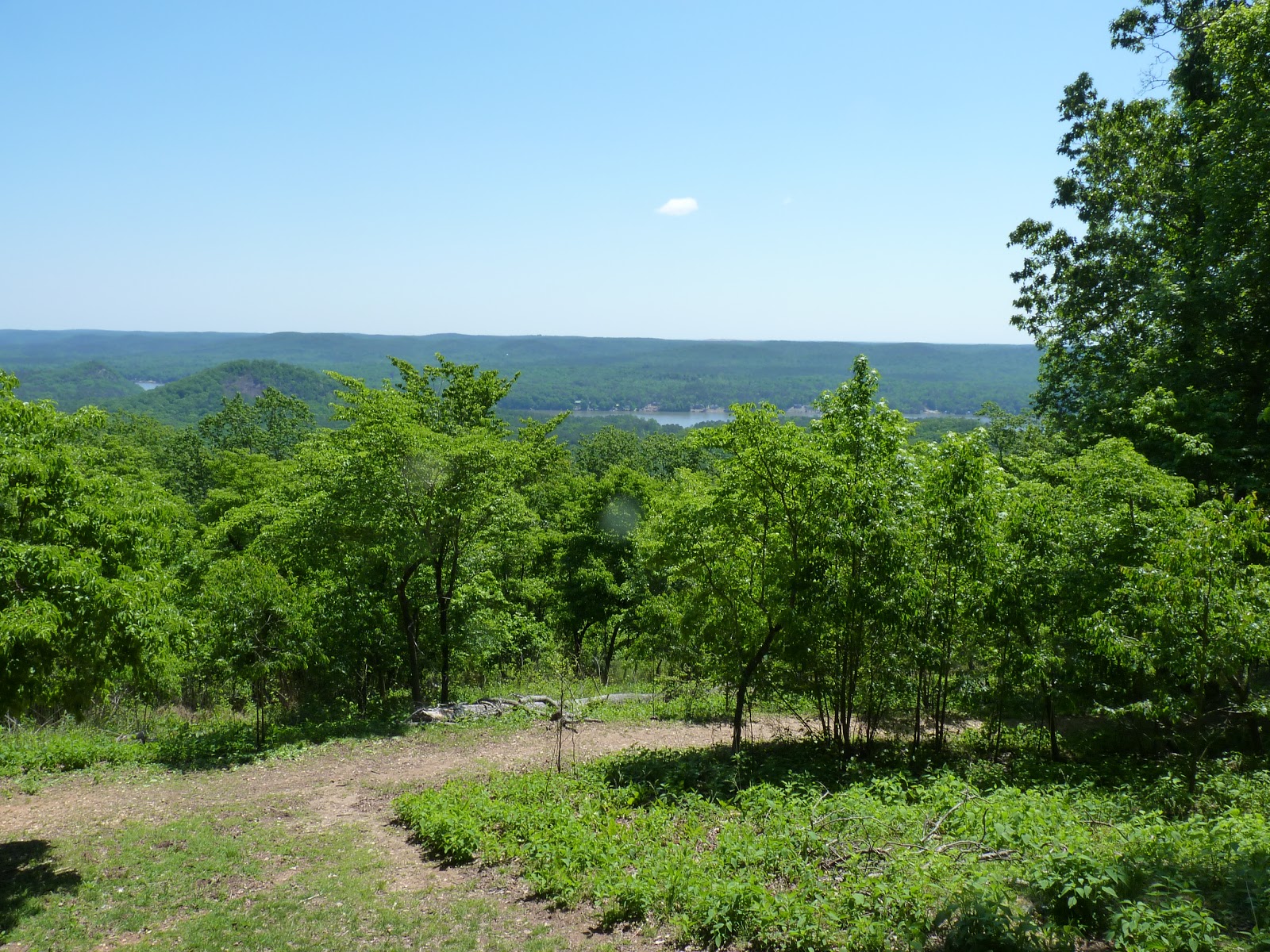
In Ohio, West Virginia, Virginia, North Carolina and Kentucky. Just enough camping, some relaxing in hotels. We discovered the site of ancient family history above.
Once upon a time, over 400 years ago, this was the view from the coast at Jamestown.
We visited the Jamestown Rediscovery site, complete with lectures on archeology and history in the original location of the settlement by the English beginning in 1607. The brick church was added much later.
The investigation has expanded to include the nearby "Newtown" area.
We visited Yorktown, across the peninsula from Jamestown. Perhaps the home above is old enough to have survived the decisive battle.
Enjoyed the free ferry boat ride from Jamestown to Scotland, VA and got this photo of old Jamestown from the boat.
On a visit to family in North Carolina, we took a hike up the Morrow Mountain, site of extensive tribal stone mining (to obtain material of projectile points). While in NC, we had lunch at the Chapel Hill soul food place, Mama Dips. Best food on the trip. Perfect fried chicken--so good.
Finished up at the Red River Gorge in east central Kentucky. Now I am home doing all the yard work that waited while we enjoyed our trip.
Subscribe to:
Posts (Atom)
To Remember Dad's 103rd Birth Anniversary, Something Different
My Grandparents on my Dad's side were both "bonus babies", kids who were born to much older parents, long after they expected...
-
The Official First Flower of the Growing Season 2010--the chilly, bloodless snow-drop tentatively peeps up, through the crust of bird-seed ...
-
This raucous bird looks like a Fish Crow I miss these small lizards and their antics, now that I am home in Illinois
-
We spent the morning at the Orlando Museum of Art. It is not too large, so easily toured in a leisurely morning. The museum owns a well ...